The Digital Shelf Revolution: What Is It and Why Does It Matter? ZoneX Solutions for Smart Retail Management
What Is a Digital Shelf?
The term Digital Shelf has two closely related meanings. In e-commerce, it refers to how products appear in search results, online stores, and product pages, including images, descriptions, prices, availability, and customer reviews.
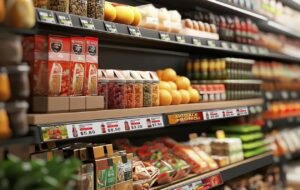
In physical retail stores, it refers to connecting shelves with digital display and monitoring technologies, such as Electronic Shelf Labels (ESL), inventory management systems, and Point of Sale (POS) solutions.
The goal in both cases is the same: to provide customers with consistent, up-to-date information while reducing discrepancies between what is displayed in the store and what is recorded in its management systems.
This is especially important for retailers managing large product catalogs, multiple branches, or frequently changing promotions.
What Is the Difference Between a Digital Shelf and a Smart Shelf?
A Digital Shelf is a broader concept that includes a product’s online visibility and the management of its information across different sales channels.
A Smart Shelf, on the other hand, is a physical retail shelf that uses connected hardware or software to update prices, monitor product availability, or support store operations.
Not every smart shelf needs cameras, sensors, and RFID technology simultaneously. The right combination of technologies depends on the store’s size, business type, and operational requirements.
How Do ZoneX Electronic Shelf Labels Work?
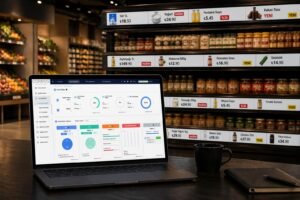
Electronic Shelf Labels (ESL) are among the most practical applications of smart shelf technology.
These small digital displays are attached to retail shelves to show product prices and names. Depending on the device and system configuration, they may also display additional product information.
Instead of manually replacing paper price tags, retailers can manage information through a centralized platform and send updates to connected labels.
The process typically works as follows:
- A product price or promotion is approved in the pricing management or POS system.
- The information is transferred to the ESL management system through the configured integration.
- The system identifies the label associated with the product and sends the update through the appropriate network.
- The new price appears on the shelf, while the retailer verifies that it matches the checkout price.
According to its website, ZoneX offers electronic shelf labeling solutions, centralized content management, and integration capabilities with inventory management and POS systems.
Update speed and connectivity features depend on the equipment used and the project’s technical configuration.
Explore ZoneX Electronic Shelf Label Solutions
ZoneX Solutions That Complete the Digital Shelf Ecosystem
1. Electronic Shelf Labels (ESL)
Electronic shelf labels help reduce the need to print new paper tags whenever prices change.
They also improve the consistency of information displayed on shelves and make promotional campaigns easier to organize.
These solutions are particularly suitable for supermarkets, electronics retailers, pharmacies, and multi-branch retail businesses.
2. Retail Management System (RMS)
The ZoneX Retail Management System provides features related to billing, sales, inventory, customer management, promotions, and reporting.
The company’s website highlights capabilities for monitoring inventory levels, managing multiple branches, and synchronizing information between online and physical stores, depending on the system configuration.
This allows retailers to move toward a more unified source of product information instead of relying on disconnected spreadsheets and manual processes.
3. Point of Sale Systems and Cash Registers (POS)
The benefits of electronic pricing are limited if the price displayed on the shelf differs from the amount charged at checkout.
This is where Point of Sale (POS) systems play an essential role.
POS systems record transactions, generate invoices, and update sales information.
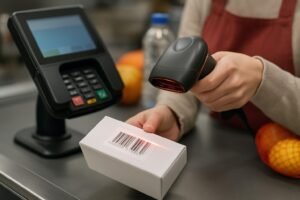
ZoneX offers products such as a 15-inch Touchscreen POS Cash Register, equipped with a receipt printer and barcode scanner.
This is a practical example of the hardware used to support everyday retail operations.
4. Inventory and Warehouse Management, Barcode, and RFID
A store’s inventory system may indicate that a product is available in the warehouse even when its display shelf is empty.
ZoneX Warehouse and Inventory Monitoring Solutions help businesses organize product movements, stocktaking, receiving, and dispatch operations.
The company’s website also mentions support for barcode devices, RFID technologies, and integration with ERP systems, depending on implementation requirements.
These tools provide clearer operational information, helping employees make better decisions about stock replenishment.
Managing product information inside a retail store using a tablet — image from the ZoneX Pro website.
5. Odoo and ERP Systems
Product information, sales, inventory, and purchasing activities can be connected within a unified operational environment through the Odoo and ERP Solutions offered by ZoneX.
However, successful integration requires checking compatibility with existing systems, identifying the primary source of product information, and testing updates before rolling out the solution across all branches.
6. Digital Signage and Advertising Displays
While ESL solutions focus on product and pricing information at the shelf, Digital Signage Management Systems help retailers display promotional content, images, and marketing messages on screens throughout the store.
Digital signage can be used to advertise seasonal campaigns, guide customers to specific departments, and highlight selected products through a structured content strategy.
How Does the Digital Shelf Ecosystem Solve Everyday Retail Challenges?
Reducing Pricing Discrepancies
When prices are managed through a clearly defined source and shelf labels are properly integrated with POS systems, the likelihood of displaying a different price at checkout can be reduced.
It also becomes easier to review price changes before promotions begin.
Saving Time on Promotional Updates
Instead of printing new paper labels for every promotional campaign, retailers can update prices electronically through properly configured systems.
Actual time savings depend on the number of products, store branches, and frequency of price changes.
Improving Inventory Monitoring
Recording sales, stocktaking activities, and product movements helps retailers identify items that need to be reordered or replenished on shelves.
This reduces reliance on manual estimates and provides better visibility into stock availability.
Creating a Clearer Shopping Experience
When customers see readable prices, updated product information, and clearly displayed promotions, making purchasing decisions becomes easier.
Digital signage can further improve this experience by highlighting relevant product information and promotional campaigns.
Practical Example: A Weekend Promotion in a Supermarket
Imagine a supermarket preparing to launch a weekend promotion covering 200 products.
With traditional pricing methods, employees would need to print new price tags, distribute them, install them on the correct shelves, and verify their accuracy.
With an integrated electronic shelf labeling system, the process can be more streamlined.
The store’s management team can prepare price changes centrally, send updates to the labels associated with the selected products, and verify that the new prices appear correctly.
When customers make purchases, the POS system records the transactions, while RMS or inventory management systems track product movements.
This example is illustrative and does not guarantee a specific implementation time or outcome. Actual performance depends on the devices, integrations, network infrastructure, and store procedures.
Which Businesses Can Benefit from ZoneX Solutions?
Supermarkets and Grocery Stores: Managing frequently changing prices, promotions, and fast-moving inventory.
Pharmacies: Managing inventory, pricing, and expiration dates according to the implemented system while maintaining compliance with applicable regulatory requirements.
Electronics Retailers: Displaying product prices and model information while making promotional updates easier.
Clothing and Furniture Stores: Coordinating pricing and promotional campaigns across departments and branches.
Restaurants and Cafés: Benefiting from POS systems, digital displays, and order management solutions, even when electronic shelf labels are not a priority.
How to Start Your Digital Shelf Project with ZoneX
- Identify your main challenge: Is your business struggling with pricing discrepancies, inventory management, branch coordination, or promotional displays?
- Review your existing systems: Identify your current POS or ERP software, product database, and barcode infrastructure.
- Choose the right solution: Consider ESL for electronic pricing, RMS for retail management, inventory solutions for stock control, and digital signage for promotional content.
- Run a limited pilot project: Test system compatibility, update accuracy, network coverage, and employee training.
- Measure results before expanding: Monitor pricing accuracy, promotion update times, inventory discrepancies, and operating costs.
Frequently Asked Questions About Digital Shelves
Are Digital Shelves the Same as Electronic Shelf Labels?
No. A digital shelf is a broader concept, while Electronic Shelf Labels (ESL) represent one of its applications within physical retail stores.
Can Electronic Shelf Labels Work Without a POS System?
Some display solutions may operate independently. However, integration with a reliable pricing source and POS system is important for reducing discrepancies.
The specific integration requirements should be confirmed before selecting a solution.
Does Every Retail Store Need RFID Technology?
No. Barcode systems and inventory management software may be sufficient for some retailers.
RFID can be more suitable for other applications depending on product types, operational volume, and tracking requirements.
Can a Retailer Start with Just One Branch?
Yes. Starting with a limited pilot project is often a practical approach to evaluating system integration and ease of use before expanding to additional locations.
Can Electronic Shelf Labels and Digital Signage Be Used Together?
Yes. Each technology serves a different purpose.
Electronic shelf labels display product information and pricing at the shelf, while digital signage displays promotional campaigns and marketing content throughout the store.
Conclusion: From Traditional Shelves to Smarter Retail Stores
The Digital Shelf Revolution is not simply about replacing paper labels with digital screens.
It is about creating a retail environment built on more accurate information and better integration between pricing, inventory, point of sale systems, and promotional activities.
ZoneX Pro offers a range of solutions that businesses can evaluate and implement according to their operational needs, from Electronic Shelf Labels and Retail Management Systems to Warehouse Management Solutions and Digital Signage.
By selecting the right technologies and integrating them effectively, retailers can take practical steps toward more efficient operations, consistent product information, and a better customer experience.
